
Areas of focus
Current severity and functioning
When a service-connected mental health condition has gotten worse, an evaluation compares the current picture with the earlier one and explains the effects on daily life, relationships, and work.
01 / KNOW THIS FIRST
02 / COURSE OVER TIME
When did the condition begin—and how did it change?
A timeline can help frame the clinical question. It does not prove the answer. Records, history, findings, and other possible causes still matter.
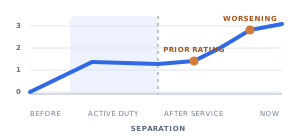
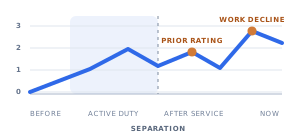
Illustration only · 0–3 is not a clinical scale
Hypothetical example: Veteran Poitier
Poitier had PTSD symptoms at the last rating. Panic is now weekly, shopping alone has stopped, and missed work has risen. The exam compares the earlier level with the current one.
Hypothetical example: Veteran Quine
Quine still has better and worse weeks. Even so, the overall course now includes more isolation, more help with daily tasks, and less steady work than at the prior rating.
Overall severity rises
Symptoms are present at the earlier rating, then grow more severe near now.
Symptoms vary, but function declines
Good and bad periods remain, while missed work and isolation rise over time.
03 / HOW A PSYCHOLOGIST THINKS ABOUT IT
What has changed?
The clinician compares current symptoms and functioning with earlier exams, treatment records, and the veteran’s prior level. A new event or condition may also need to be considered.
How are symptoms described?
A useful account explains how often a symptom happens, how strong it is, how long it lasts, and what it changes. Examples from home, relationships, self-care, community life, and work make the picture clearer.
What can the evaluation decide?
The psychologist describes clinical severity and functioning. VA reviews that evidence with the full record and decides the disability rating.
04 / KEEP LEARNING